<p>When we lived in Napa, CA, we removed a <a href="https://en.wikipedia.org/wiki/Sequoia_sempervirens">coast redwood</a> (<em>Sequoia sempervirens</em>) that was 6 feet in diameter at its base and 12 feet from the corner of a Victorian cottage we ran as a vacation rental and threatened the foundation. Moreover, I learned from a former lumberman that redwoods have “sleepers” which are long branches that break off and then descend like javelins. He related he saw a sleeper that pierced through a house’s roof and through the refrigerator. With guests staying in the cottage, that was a real danger. Before removing the tree, we hired a consultant who said he like to see redwoods at least 100′ away from houses.</p>
<p>So down the redwood tree went… but I had the tree service salvage all of the trunk except for the top 9 feet; he cut the trunk into lengths of 7′-6″, a length I specified thinking it sould be long enough for any of my projects. I purchased the most powerful chainsaw Stihl sells in the United States along with a 60″ bar — I used that to quarter the lower trunk. I created a little plywood pathway and muscled the sawn quarters onto a 4 wheel dolly, one at a time and then pushed them to my Timberking 1220 sawmill. I then milled the quarter into cants so they would stack neatly and it allowed me to defer the decision of what size lumber I might desire.</p>
<p>When we moved to Salem, Oregon, I moved my cants with me anticipating I would use them for raised beds and greenhouse benches. The cants measured as much as 10 to 18″ wide and 4″ to14″ thick and 7′ 4″ long. Being redwood, they were much lighter than, say, American elm.</p>
<p>After much back-and-forth making a prototype bench redwood bench for my greenhouse, I settled on design standards and thus could proceed milling the lumber I would need for my greenhouse (12′ x 22′).</p>
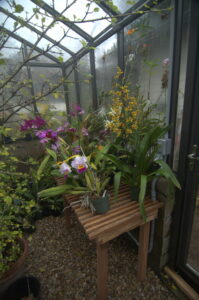
<p>Here’s the prototype using 3/4″ square slates spaced 3/4″ apart on a rails that are 1 -1/4″ thick and 3″ wide. This prototype is 3-1/2′ long. The surface height is 30″.</p>
<p><img class="alignnone size-medium wp-image-391" src="https://salemdata.net/johnpress/wp-content/uploads/2026/01/DSC_8455_v2-199×300.jpg" alt="" width="199" height="300" /></p>
<p>My bench design is calls for about 38 lineal feet of benches ranging from 24″ deep to 27″ deep and then 36″ wide in the center bench. Here’s my 1/4″ scale drawing:</p>
<p><img class="alignnone size-medium wp-image-390" src="https://salemdata.net/johnpress/wp-content/uploads/2026/01/greenhouse_benches_drawing_v1-257×300.webp" alt="" width="257" height="300" /></p>
<p>I estimated I needed 18 rails measuring 7′, but some of the wood is punky and may have knots, so I figured I should mill 20-30. I ended up with 50+. Getting large cants set up and squared and mill takes a lot of time to set up, so I figure I can use the other boards for other projects, e.g. a potting bench. It took me about 2 hours to mill these 50 boards.</p>
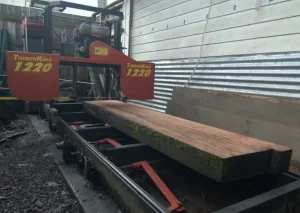
<p>Here is a leftover cant where I already slabbed some boards, I got 3 more slabs off this cant.<br />
<img class="alignnone size-medium wp-image-392" src="https://salemdata.net/johnpress/wp-content/uploads/2026/01/redwood_cant_leftover_from_previous_slabbing-300×213.webp" alt="" width="300" height="213" /></p>
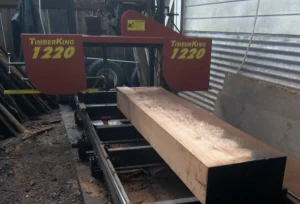
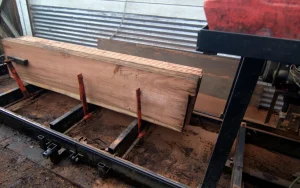
<p>Then I squared all sides. Below is the start of cutting a 1-1/4″ slab off the top of another cant.</p>
<p><img class="alignnone size-medium wp-image-395" src="https://salemdata.net/johnpress/wp-content/uploads/2026/01/first_slab_cut_after_squaring-300×204.webp" alt="" width="300" height="204" /></p>
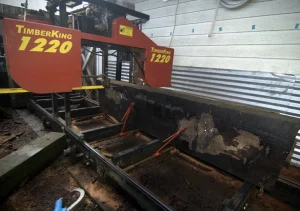
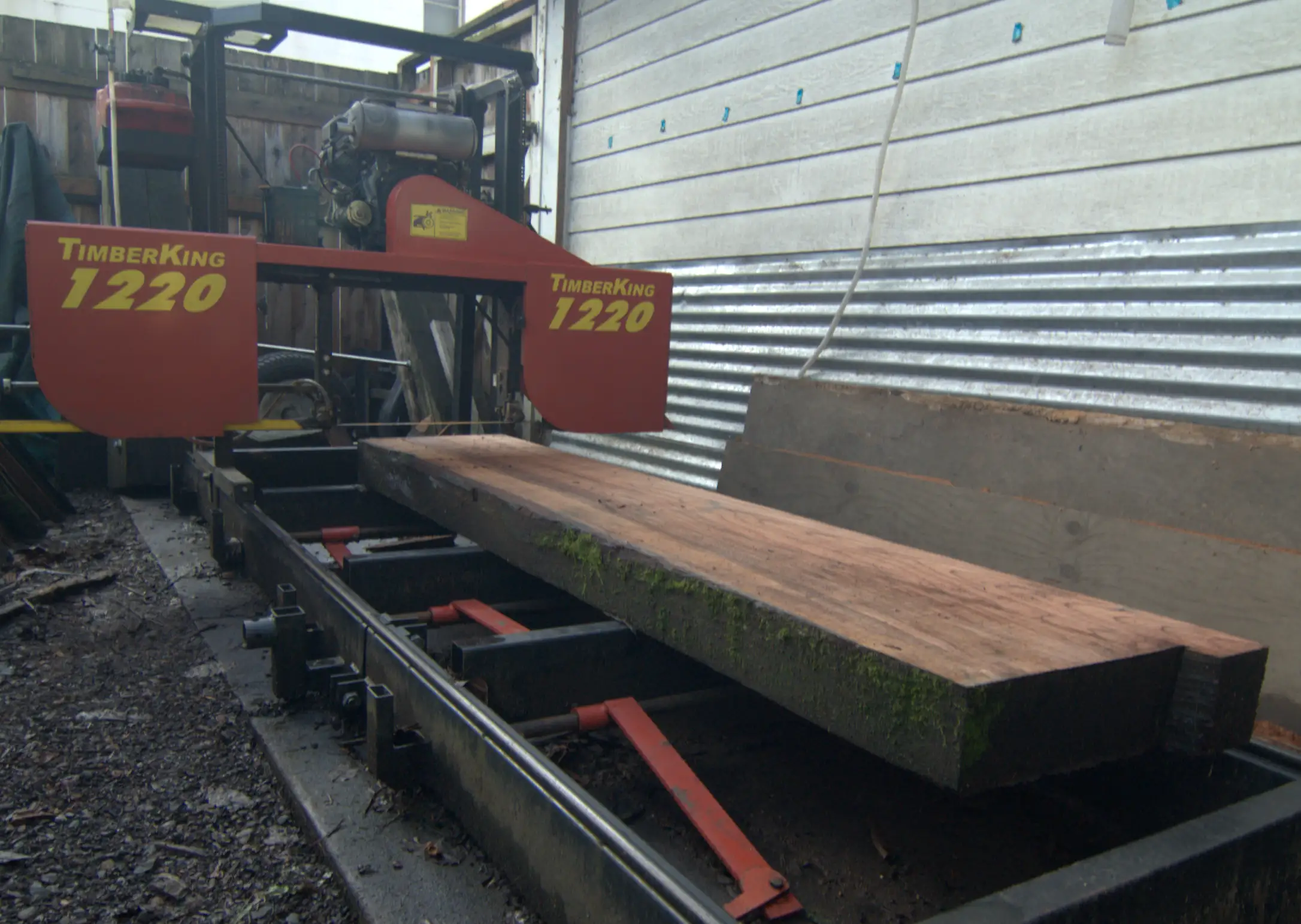
<p>Here’s another cant (last cut in Napa in 2017), notice the patina and moss that is acquired sitting outside in Salem for 8 years.</p>
<p><img class="alignnone size-medium wp-image-393" src="https://salemdata.net/johnpress/wp-content/uploads/2026/01/Squaring_the_cant-300×211.webp" alt="" width="300" height="211" /></p>
<p>After I slabbed the cant, I then placed the slabs from both cants perpendicular and cut off 3-1/4″ boards.</p>
<p><img class="alignnone size-medium wp-image-394" src="https://salemdata.net/johnpress/wp-content/uploads/2026/01/Readying_slabs_for_slicing_to_3_inch_boards-300×188.webp" alt="" width="300" height="188" /></p>
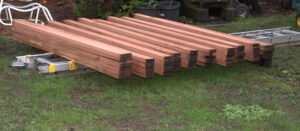
<p>And here is the finished product: 50 boards neatly stacked. Next step is to plane the four sides.</p>
<p><img class="alignnone size-medium wp-image-397" src="https://salemdata.net/johnpress/wp-content/uploads/2026/01/DSC_4924_v1-300×131.jpg" alt="" width="300" height="131" /></p>
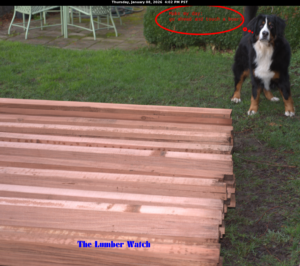
<p>We have a lot of petty theft in our neighborhood, so our Bernese mountain dog, Josie, stands ready watch to prevent theft.</p>
<p><img class="alignnone size-medium wp-image-398" src="https://salemdata.net/johnpress/wp-content/uploads/2026/01/20260108_155930_Thu-300×266.png" alt="" width="300" height="266" /></p>
<p> </p>
<p> </p>
When we lived in Napa, CA, we removed a coast redwood (Sequoia sempervirens) that was 6 feet in diameter at its base and 12 feet from the corner of a Victorian cottage we ran as a vacation rental and threatened the foundation. Moreover, I learned from a former lumberman that redwoods have “sleepers” which are long branches that break off and then descend like javelins. He related he saw a sleeper that pierced through a house’s roof and through the refrigerator. With guests staying in the cottage, that was a real danger. Before removing the tree, we hired a consultant who said he like to see redwoods at least 100′ away from houses.
So down the redwood tree went… but I had the tree service salvage all of the trunk except for the top 9 feet; he cut the trunk into lengths of 7′-6″, a length I specified thinking it sould be long enough for any of my projects. I purchased the most powerful chainsaw Stihl sells in the United States along with a 60″ bar — I used that to quarter the lower trunk. I created a little plywood pathway and muscled the sawn quarters onto a 4 wheel dolly, one at a time and then pushed them to my Timberking 1220 sawmill. I then milled the quarter into cants so they would stack neatly and it allowed me to defer the decision of what size lumber I might desire.
When we moved to Salem, Oregon, I moved my cants with me anticipating I would use them for raised beds and greenhouse benches. The cants measured as much as 10 to 18″ wide and 4″ to14″ thick and 7′ 4″ long. Being redwood, they were much lighter than, say, American elm.
After much back-and-forth making a prototype bench redwood bench for my greenhouse, I settled on design standards and thus could proceed milling the lumber I would need for my greenhouse (12′ x 22′).
Here’s the prototype using 3/4″ square slates spaced 3/4″ apart on a rails that are 1 -1/4″ thick and 3″ wide. This prototype is 3-1/2′ long. The surface height is 30″.
My bench design is calls for about 38 lineal feet of benches ranging from 24″ deep to 27″ deep and then 36″ wide in the center bench. Here’s my 1/4″ scale drawing:

I estimated I needed 18 rails measuring 7′, but some of the wood is punky and may have knots, so I figured I should mill 20-30. I ended up with 50+. Getting large cants set up and squared and mill takes a lot of time to set up, so I figure I can use the other boards for other projects, e.g. a potting bench. It took me about 2 hours to mill these 50 boards.
Here is a leftover cant where I already slabbed some boards, I got 3 more slabs off this cant.
Then I squared all sides. Below is the start of cutting a 1-1/4″ slab off the top of another cant.
Here’s another cant (last cut in Napa in 2017), notice the patina and moss that is acquired sitting outside in Salem for 8 years.
After I slabbed the cant, I then placed the slabs from both cants perpendicular and cut off 3-1/4″ boards.
And here is the finished product: 50 boards neatly stacked. Next step is to plane the four sides.
We have a lot of petty theft in our neighborhood, so our Bernese mountain dog, Josie, stands ready watch to prevent theft.
Leave a Reply