pas pour les âmes sensibles
[Not for the faint of heart]” – François Rabelais?

Voron Design is a three dimensional printing (“3D”) project created in 2015
to create a no-compromise 3D printer that was fun to assemble and a joy to use. It had to be quiet, clean, pretty, and continue to operate 24 hours a day without requiring constant fiddling. In short a true home micro-manufacturing machine without a hefty price tag.
Background
“Voron” (Ворон) is a Russian word meaning “raven.”
The project was started in 2015 by a small group of developers in the RepRap community. The original founder used the handle “VORON”, and the printer family inherited that name. Over time, it became the formal project identity.
Why “Raven”?
There is no official manifesto explaining a symbolic choice, but several reasonable inferences align with the project’s character:
-
Ravens are intelligent and tool-using → fitting for a highly engineered, community-driven machine.
-
Black aesthetic → Voron printers are traditionally black with red accents.
-
Distinctive and memorable → short, sharp, and internationally recognizable.
The name functions more as a project identity and founder alias than as a technical acronym. It is not an abbreviation (e.g., not “V.O.R.O.N.” for something else).
The project publishes guides on how to build and specifies certain components, the project does not manufacture hardware. So there is no “Voron” machine. There are only machine built in accordance with Voron design standards. Think of Voron as an informal Underwriters Laboratory which establishes industry-wide safety standards, in addition to certification and testing, allowing certified products to market their product carrying the UL label.  While not as formal as UL, the Voron Design creates guides. With a design guide, you will have a listing of all the parts you need, with specifications, and possible sources who may carry them. Some vendors have created kits that have all of the components together in one kit that you can buy so you do not have to order various parts from different vendors. So various 3D printing retailers may sell “Voron Design” kits that have everything you need to assemble a 3D printer.
Trident
The Voron design that I am interested in is the Voron Trident. The Voron “Trident” derives its name from its defining mechanical feature: three independent Z-axis lead screws that support and level the build platform. Like the three prongs of a trident, these screws form a geometrically stable plane, allowing precise automatic bed tramming while maintaining structural simplicity. The name is both literal and architectural — a rare case where branding aligns directly with kinematic design.
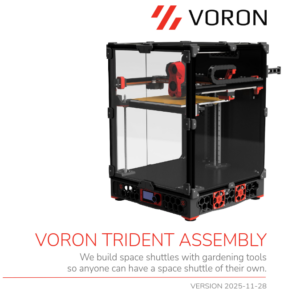
The Voron Trident Assembly guide is a 291 page document to build the “assembly” shown in this accompanying image. It is loaded with diagrams and step-by-step instructions. The estimated time to build a unit is 40-60 hours, though a sales person at West3d in Beaverton, OR, where I purchased my unit said it took him about 20 hours, but he has been building 3D printers from scratch for over a decade. So I’m estimating it will take me a week if treat this as a full time job until completed. There is a gentleman on YouTube who films live his building of units, his series devoted to the Trident has
The project is open sourced, including the software which runs on a Raspberry Pi 4B. Another core Voron design principle of the project is that printers assembled use only Commercial Off-The-Shelf (“COTS”) parts so no single vendor controls the ecosystem. This principle is very important to me. I see the 3D industry’s commercial vendors who started their business under the aegis of open source starting to move in the direction of product-lock-in, e.g. Apple, and making functionality dependent upon a manufacturer’s cloud service and/or secret proprietary firmware.
3D Printing and Government Censorship
As of February 1, 2026, the State of Washington has two bills winding its way through its state legislature:
- House Bill 2321 (HB 2321) — Requires blocking technology in 3-D printers
-
🔗 Washington Legislature Bill Summary:
➡️ https://app.leg.wa.gov/billsummary?BillNumber=2321&Year=2025🔗 Official Bill Text (PDF):
➡️ https://lawfilesext.leg.wa.gov/biennium/2025-26/Pdf/Bills/House%20Bills/2321.pdf🔗 Bill Text in HTML:
➡️ https://lawfilesext.leg.wa.gov/biennium/2025-26/Htm/Bills/House%20Bills/2321.htm
-
- House Bill 2320 (HB 2320) — Prohibits unlicensed use of 3-D printers for firearms
-
🔗 Washington Legislature Bill Summary:
➡️ https://app.leg.wa.gov/billsummary?BillNumber=2320&Year=2025🔗 Official Bill Text (PDF):
➡️ https://lawfilesext.leg.wa.gov/biennium/2025-26/Pdf/Bills/House%20Bills/2320.pdf
-
While these bills are trying to solve the problem of “ghost guns”, guns built by 3D printers and thus not traceable, they could have the unintended consequence of making 3D printing the business of government,. In other words, your 3D printer would be subject to governmental authorization and analysis of what you intend to print which I believe is a form of censorship which the United States Constitution is suppose to protect us from. I was a lawyer for 40 years and I have seen how legislation enacted for a noble stated purpose is actually used to the public’s detriment. Examples: the California Public Records Act takes away the right of appeal on public records actions, ostensibly to allow quick review by an appellate court, but what happens is an appellate court can simply decline to consider the matter and not provide and/or publish its reasoning. The California Emergency Services Act allows the State of California to spray malathion to quickly deal with an “emergency” pestilence, but it also attempts to allow the state to take property with compensation. The statutes allowing for small claims lets Superior Court judges overturn awards without having to follow the law and published precedent. I’ve had personal experience in all these areas witness how the supposedly good statutes was being applied towards a nefarious end.
John’s Machine
On February 1, 2026, I purchased a Voron Trident kit from West3D. I drove up to the store about 45 miles north of Salem which is open 7 days a week because I wanted to see the actual filament colors and examples of printed items to see their finish. I also wanted to take delivery so I could ready the kit for assembly once the fabricated plastic parts arrive by mail — those had to be ordered (with color specifications) and then they will be printed somewhere among a network of 3D printing vendors and sent to me.
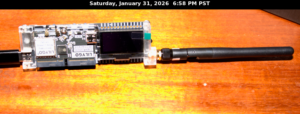
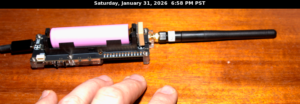
I advised West3D that I wanted to print enclosures for small computer projects, e.g. Raspberry Pi and ESP32 boards, as well as sensors that would be weather resistant. I have been using TiCONN boxes from Amazon, but some of my sensor needs for my greenhouse monitoring would be better suited in a custom enclosure(s). I also have Lora Radio units, the LilyGO T-Beam SUPREME, that need cases as the selection of off-the-shelf cases available was nonexistent.
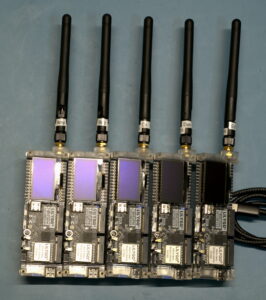
They recommended the Voron Trident [Version 1] design and not the newer V2 [Version 2]. Version 1 has a bed the moves on the Z-axis, where as Version 2 has a stable bed and the printer head does all the movement for X, Y, and Z. ChatGPT confirmed the recommendation noting that the newer Version 2 would be better for something like a model of a tree where moving the object being printed might cause it to wiggle from its own momentum if the plate is moving about, so a non-moving base is desirable, whereas the Version 1 has a proven track record of stability and would be better suited for building boxes and enclosures.
Costs (ongoing)
Voron Trident Costs
| Date | Cost | Description | Accumulated Cost | |
|---|---|---|---|---|
| 2/1/2026 | $1,390.94 | Voron Trident LDO Kit + 5 reels of ASA filament | 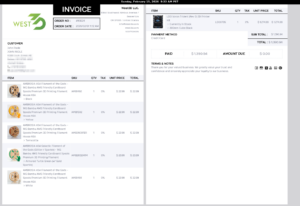 | $1,390.94 |
| 2/1/2026 | $233.41 | Voron Trident Parts Printing: | 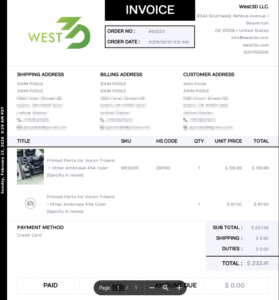 | $1,624.35 |
What Arrives
The Trident kit comes in 2 boxes:
- 13.25 Kg, 29.3 lbs; 61 x 57 x 16.5 cm
- 14.35 kg, 31.6 lbs, 57 x 48 x 14 cm
I also purchased 5 rolls of ASA (Acrylonitrile Styrene Acrylate) filament: white, black, green, terracotta, and yellow. My first goal is to make outdoor boxes for sensors and weather-resistent enclosures for the LilyGo units. West3D’s assistant, Ian, recommended ASA for outdoor applications.
ASA has high outdoor weatherability; it retains gloss, color, and mechanical properties in outdoor exposure. It has good chemical and heat resistance, high gloss, good antistatic properties, and is tough and rigid. It is used in applications requiring weatherability, e.g. commercial siding, outside parts of vehicles, or outdoor furniture. Source: https://en.wikipedia.org/wiki/Acrylonitrile_styrene_acrylate#Properties.
Build Time
YouTube @SteveBuilds
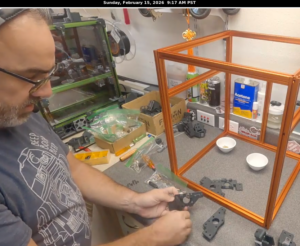
Steve [Last name not specified] has been on YouTube since Aug 3, 2009. He has over 14,000 subscribers and had produced 300+ videos. His playlist for the Voron Trident build is here. Here is a summary of his Trident series
| Number | Hours | Minutes | Seconds | Title |
| 1 | 4 | 52 | 57 | LDO Voron Trident Beta Kit Build (Part 1) |
| 2 | 2 | 16 | 12 | LDO Voron Trident Beta Kit Build (Part 2) |
| 3 | 3 | 48 | 9 | LDO Voron Trident Beta Kit Build (Part 3) |
| 4 | 5 | 57 | 13 | LDO Voron Trident Beta Kit Build (Part 4) |
| 5 | 6 | 53 | 26 | LDO Voron Trident Beta Kit Build (Part 5) |
| 6 | 4 | 31 | 6 | LDO Voron Trident Beta Kit Build (Part 6) |
| 7 | 3 | 54 | 9 | LDO Voron Trident Beta Kit Build – Extras! |
| Total | 27 | 311 | 132 | |
| Hours | 34.4 |
Toxicity
3D printing creates air particulates and volatile (aka “VOCs”) organic compounds. I take these risks very seriously and plan to monitor with sensors the levels and ways to mitigate.
Fire Danger
With heated chambers and nozzles, there is a risk of fire danger, especially if the unit is unattended. How I will monitor and assess remains to be seen.
Leave a Reply